
Jaw pain is easy to dismiss. Maybe you slept wrong, you’ve been under more stress than usual, or you’ve caught yourself clenching your teeth during the day. But when jaw discomfort keeps coming back—or starts appearing alongside headaches, clicking, or facial tension—it may be a sign of a temporomandibular joint (TMJ) disorder.
TMJ disorders can affect the joints that connect your lower jaw to your skull as well as the muscles responsible for chewing and jaw movement. Because these muscles and joints are involved in so many everyday activities, TMJ problems can cause symptoms that extend well beyond the jaw.
At Elite Healthcare Partners, we evaluate patients experiencing jaw pain and related symptoms and offer non-invasive treatment options, including EMFACE Functional TMJ.
Here are seven signs that it may be time to have your symptoms evaluated.
1. Your Jaw Regularly Hurts or Feels Sore
Recurring pain or tenderness around the jaw is one of the most recognizable signs of TMJ dysfunction.
You might notice soreness near the jaw joint in front of your ears or feel discomfort throughout the muscles along your cheeks and jawline. For some people, the pain becomes more noticeable after eating, talking for long periods, or waking up in the morning.
Occasional soreness doesn’t necessarily mean you have a TMJ disorder. However, pain that persists, repeatedly returns, or interferes with normal activities deserves attention.
2. Your Jaw Clicks, Pops, or Grinds
Does your jaw make noise when you open your mouth, chew, or yawn?
Clicking and popping can occur without pain and don’t always indicate a problem. But when these sounds are accompanied by pain, stiffness, limited movement, or a change in how your jaw functions, they may be associated with TMJ dysfunction.
Grinding or grating sensations within the joint should also be discussed with a healthcare provider, particularly if they’re new or worsening.
3. You Wake Up With Headaches or Jaw Tension
Not every headache starts in your head.
Overworked muscles around the jaw and face can contribute to tension and discomfort that may be felt around the temples, forehead, face, or neck.
If you regularly wake up with a tight jaw and a headache, nighttime clenching or teeth grinding may be contributing to your symptoms.
Many people don’t realize they’re clenching or grinding because it happens while they’re asleep.
4. You Clench or Grind Your Teeth
Teeth grinding, also known as bruxism, can place significant strain on the muscles involved in jaw movement.
Clenching can happen at night, during periods of stress, while concentrating, or even while exercising. Over time, repeatedly tightening these muscles may contribute to soreness, fatigue, headaches, and other TMJ-related symptoms.
Signs that you may be grinding or clenching include:
- Morning jaw soreness
- Tight facial muscles
- Tooth sensitivity
- Worn or damaged teeth
- Headaches after waking
- Feeling as though your jaw muscles are constantly “working”
A dental professional may also notice evidence of grinding during a routine examination.
5. It’s Becoming Harder to Open Your Mouth
TMJ dysfunction can sometimes affect your jaw’s range of motion.
You may notice that you can’t comfortably open your mouth as wide as you once could. Eating a large bite, yawning, or having dental work performed may suddenly feel uncomfortable.
Some patients also experience episodes in which the jaw feels temporarily stuck or locked.
Changes in jaw mobility should be evaluated rather than simply worked around, especially if they’re becoming more frequent.
6. You Have Unexplained Ear or Facial Discomfort
The temporomandibular joints sit directly in front of the ears, which is one reason TMJ symptoms aren’t always immediately recognized as a jaw problem.
Some people with TMJ disorders report sensations such as:
- Ear pressure or fullness
- Aching around the ear
- Facial soreness
- Pain around the temples
- Tension extending into the neck
Ear symptoms can have many causes, including conditions that have nothing to do with the jaw. That’s why persistent or unexplained symptoms should be properly evaluated rather than assumed to be TMJ.
7. Chewing Has Become Uncomfortable
Eating shouldn’t hurt.
If your jaw becomes tired, sore, or painful while chewing, the muscles or joints responsible for jaw movement may not be functioning comfortably.
You might notice that harder or chewy foods make symptoms worse, that you unconsciously favor one side of your mouth, or that your jaw feels fatigued before you’ve finished eating.
When discomfort starts changing how you eat, it’s a good indication that it’s time to investigate the cause.
When Should You See a Provider for TMJ Symptoms?
An occasional jaw click or temporary soreness isn’t necessarily cause for concern.
Consider scheduling an evaluation when symptoms:
- Persist or repeatedly return
- Become progressively worse
- Interfere with eating or speaking
- Limit your ability to open your mouth
- Cause frequent headaches or facial pain
- Affect your sleep or daily activities
TMJ symptoms can have different causes, so determining what’s actually contributing to your discomfort is an important part of choosing the right treatment.
Can EMFACE Help With TMJ Symptoms?
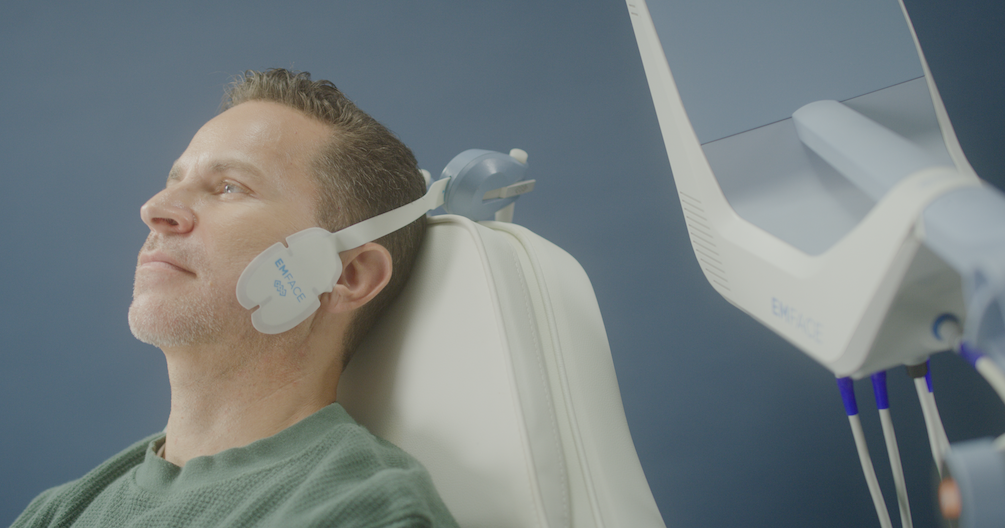
For patients whose symptoms involve muscle tension or dysfunction, EMFACE Functional TMJ provides a non-invasive treatment option.
EMFACE combines synchronized radiofrequency with High-Intensity Facial Electrical Stimulation (HIFES™). The technology is designed to address the muscles involved in jaw function through muscle stimulation and controlled heating.
EMFACE Functional TMJ applications include muscle re-education, relief of muscle spasms, improved blood circulation, and increased mandibular range of motion.
Treatment is performed without needles or surgery, and there is no required downtime.
If you’d like to understand the treatment in greater detail, read our complete guide to TMJ treatment with EMFACE, including how the technology works, what treatment feels like, and who may be a good candidate.
Don’t Ignore Persistent Jaw Pain
Jaw pain may be common, but persistent discomfort shouldn’t simply become something you learn to live with.
If you’re experiencing jaw pain, clicking, headaches, teeth grinding, facial tension, or changes in jaw movement, identifying the cause is the first step toward finding the right treatment.
At Elite Healthcare Partners, our providers can evaluate your symptoms and determine whether EMFACE Functional TMJ or another approach is appropriate for you.
Schedule a consultation with Elite Healthcare Partners to learn more about your TMJ treatment options.